Arnold Schwarzenegger is the bodybuilder most people picture when they think of the golden era. Born in Thal, Austria in 1947, he became one of the defining figures in competitive bodybuilding before becoming a movie star, public figure, and long-running voice in fitness culture.
His official biography credits him with five Mr. Universe titles and seven Mr. Olympia titles. That matters because the Arnold workout routine is not just another celebrity plan. It comes from a lifter whose physique helped move bodybuilding from a niche subculture into mainstream attention.
Arnold’s look was different from the modern mass-focused ideal. His best-known physique combined a broad chest, wide back, full shoulders, detailed arms, strong legs, and a tight waist. The goal was not size at any cost. It was size, shape, proportion, and stage presence.
That is why people still search for the Arnold Schwarzenegger workout routine. The real lesson is not that every lifter should copy his volume exactly. It is that a routine can be ambitious, structured, brutally consistent, and still built around clear visual goals.
Arnold’s training still matters because it captures the most useful parts of golden era bodybuilding: hard compound lifts, high training frequency, antagonist supersets, full ranges of motion, and enough volume to make progress visible.
It also shows the risk of copying a champion too literally. A six-day high-volume split is a serious workload. For an advanced bodybuilder with years of training, food, sleep, and recovery discipline, it can make sense. For a newer lifter with average recovery and no habit of logging workouts, it can become too much very quickly.
This guide keeps the practical parts: chest and back pairings, shoulder and arm specialization, leg training with real effort, bodyweight work, progressive overload, and the mind-muscle focus Arnold made famous. It also adds modern guardrails so the routine can be used without turning every week into a recovery problem.
The Arnold Schwarzenegger workout routine is a high-volume, high-frequency bodybuilding split built around repeated weekly exposure, compound lifts, isolation work, and a strong focus on the pump.
Treat the six-day version as a reference point. The useful Arnold lesson is structure, effort, and progression, not copying every set before your recovery can support it.
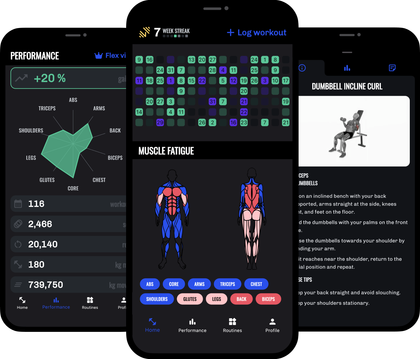
Track sets, reps, weight, rest times, RPE/RIR, supersets, and progress with Legend, on iOS and Android.
Arnold-style training needs context. High volume is not automatically better. The useful question is whether the amount of work you do is recoverable and progressive. If reps, loads, form, and energy are improving over several weeks, the plan is doing its job. If performance drops repeatedly, the routine needs less volume, more rest, or better exercise selection.
The Arnold split is a bodybuilding split that groups muscles by how they support each other visually and mechanically. The most common version looks like this:
Chest and back belong together in the classic Arnold split because they are opposing upper-body muscle groups. Pressing trains the chest, shoulders, and triceps. Pulling trains the back, biceps, and forearms. Alternating between them can create a large upper-body pump while giving each side short windows of recovery.
The same idea carries into arms. Biceps and triceps are often paired so one side rests while the other works. Legs are usually trained separately because the squat, lunge, curl, calf raise, and hip-hinge work add up quickly.
The split is simple on paper. The hard part is execution. Arnold-style training asks you to show up often, do a lot of work, move through full ranges of motion, and still come back stronger.
Arnold-style training is built on familiar lifts, which is part of why it still works. The point is not novelty; it is repeating the right presses, pulls, squats, curls, raises, and pullover patterns long enough for the exercise history to tell the truth.
Before jumping into the routines, it helps to understand the kind of exercises this training style depends on. Most are not exotic. They are repeatable, loadable, easy to track, and hard enough to make a simple logbook meaningful.
The bench press is the main flat pressing movement in the chest and back day. In an Arnold-style routine, it is usually trained with multiple hard sets and a controlled lowering phase. The point is not to bounce the bar or chase numbers at the expense of tension. The point is to load the chest heavily and then keep building the session from there.
Barbell Bench Press
The incline bench press gives the upper chest more direct work and helps create the high chest look people associate with golden era physiques. Use a steady setup, keep the elbows under control, and avoid turning every set into a shoulder-dominant press.
Barbell Incline Bench Press
The dumbbell pullover is one of the clearest golden era movements. It sits between chest and back training, which is why it appears so naturally on a chest and back day. Treat it as a controlled stretch-and-contract movement, not a heavy triceps extension.
Dumbbell Pull-Over
Pull-ups and chin-ups are essential because the Arnold look depends on back width. If sets of 10-15 are not realistic yet, use assisted pull-ups, band assistance, or pulldowns while tracking total reps. The target is not just a rep count. It is cleaner reps over time.
Pull-Up
Rows give the back thickness to match the width work from pull-ups. Keep the torso position honest. If the weight forces you to turn every rep into a hip drive, reduce the load and rebuild the movement.
Barbell Bent-Over Row
The squat is the anchor of the leg day. Arnold-style leg training is not only about quads. It asks the hips, glutes, adductors, trunk, and breathing to work hard too. Use a range of motion you can control and progress gradually.
Barbell Squat
The Arnold press is the shoulder movement most closely tied to his name. It starts with the dumbbells in front of the body, then rotates into an overhead press. The rotation can help a lifter feel the delts through more of the movement, but it also means the shoulder needs to tolerate the path. If it irritates your shoulders, a standard dumbbell overhead press is the better choice.
Lateral raises build the side delts that make the upper body look wider. Keep the weight modest and the reps controlled. If you have to swing, shrug, or turn it into a partial upright row, the set is too heavy for the job.
Dumbbell Lateral Raise
Arnold-style arm training is simple and demanding: curl hard, extend hard, and repeat the pattern with enough volume to make the arms work. Barbell curls are easy to load and track. Close-grip pressing or triceps extensions cover the other side of the arm.
Barbell Bicep Curl
The pattern matters more than the exact exercise list. Arnold-style training rewards exercises that can be loaded, repeated, measured, and paired intelligently.
Start here if you want the Arnold-style lesson without jumping straight into the full six-day workload.
Train 3 days per week at first. Keep one full rest day between sessions. Use 2-3 working sets per exercise, stop most sets with 1-2 reps in reserve, and add work only when you are recovering well.
| Exercise | Working Sets | Reps | Notes |
|---|---|---|---|
| Barbell Bench Press | 3 | 6-10 | Use controlled reps, no bouncing |
| Barbell Incline Bench Press | 2-3 | 8-12 | Keep shoulder position stable |
| Dumbbell Pullover | 2 | 10-15 | Stretch without forcing the shoulder |
| Pull-Up or Lat Pulldown | 3 | 6-12 | Track total reps if using bodyweight |
| Barbell Row or Chest-Supported Row | 3 | 8-12 | Keep the torso honest |
| Exercise | Working Sets | Reps | Notes |
|---|---|---|---|
| Barbell Squat | 3 | 6-10 | Add load only when depth and control hold |
| Leg Press or Front Squat | 2-3 | 8-12 | Pick the option your joints tolerate best |
| Lying Leg Curl | 3 | 10-15 | Control the lowering phase |
| Standing Calf Raise | 3 | 10-20 | Pause at the bottom and top |
| Crunch or Reverse Crunch | 3 | 15-30 | Use trunk flexion, not hip swinging |
| Exercise | Working Sets | Reps | Notes |
|---|---|---|---|
| Dumbbell Arnold Press or Overhead Press | 3 | 8-12 | Use the pain-free pressing path |
| Dumbbell Lateral Raise | 3 | 10-20 | Stop before swinging takes over |
| Barbell Curl | 3 | 8-12 | Keep elbows steady |
| Close-Grip Bench Press or Triceps Extension | 3 | 8-12 | Avoid elbow irritation |
| Rear Delt Raise or Face Pull | 2-3 | 12-20 | Balance the pressing volume |
Run this for 4-6 weeks before adding a fourth day. If you add the fourth day, repeat the session that is lagging most, not the one you enjoy most.
The classic Arnold split is much more demanding. The reconstructed Arnold-style template below blends the common golden-era split with the cited Arnold chest/back, legs/abs, and volume-routine sources, so use it as a historical reference and advanced training template rather than a single verified week copied from one notebook.
| Day | Focus |
|---|---|
| Day 1 | Chest, Back, Abs |
| Day 2 | Shoulders, Arms, Forearms |
| Day 3 | Legs, Calves, Lower Back |
| Day 4 | Chest, Back, Abs |
| Day 5 | Shoulders, Arms, Forearms |
| Day 6 | Legs, Calves, Lower Back |
| Day 7 | Active Recovery |
| Exercise | Sets | Reps | Rest |
|---|---|---|---|
| Barbell Bench Press | 4 | 15, 12, 10, 8 | 90-120s |
| Barbell Incline Bench Press | 4 | 15, 12, 10, 8 | 90-120s |
| Dumbbell Fly | 3 | 10, 8, 6 | 60-90s |
| Dumbbell Pullover | 4 | 12-15 | 60-90s |
| Pull-Up or Chin-Up | 5 | To near failure | 90s |
| Barbell Bent-Over Row | 4 | 15, 12, 10, 8 | 90-120s |
| Deadlift | 3 | 10, 6, 4 | 120s |
| Crunch | 5 | 20-30 | 45s |
| Exercise | Sets | Reps | Rest |
|---|---|---|---|
| Overhead Press or Clean and Press | 4 | 15, 12, 10, 8 | 120s |
| Dumbbell Arnold Press | 4 | 12, 10, 8, 6 | 90s |
| Dumbbell Lateral Raise | 4 | 12, 10, 8, 6 | 60s |
| Upright Row | 3 | 10, 8, 6 | 90s |
| Barbell Curl | 4 | 15, 12, 10, 8 | 90s |
| Dumbbell Curl | 4 | 12, 10, 8, 6 | 60s |
| Close-Grip Bench Press | 4 | 15, 12, 10, 8 | 90s |
| Overhead Triceps Extension | 4 | 12, 10, 8, 6 | 60s |
| Wrist Curl or Reverse Curl | 3-4 | 12-15 | 60s |
| Exercise | Sets | Reps | Rest |
|---|---|---|---|
| Barbell Back Squat | 5 | 20, 15, 10, 8, 6 | 120s |
| Front Squat or Leg Press | 4 | 12, 10, 8, 6 | 120s |
| Barbell Lunge | 3-4 | 10-12 per leg | 90s |
| Lying Leg Curl | 4 | 15, 12, 10, 8 | 60s |
| Stiff-Leg Deadlift | 3 | 10, 8, 6 | 90s |
| Good Morning | 2-3 | 10-12 | 90s |
| Standing Calf Raise | 5 | 12-20 | 60s |
| Seated Calf Raise | 4 | 12-20 | 60s |
| Reverse Crunch | 5 | 20-30 | 45s |
Do not turn the recovery day into another hard workout. Walk, do easy mobility, practice light posing or stretching if you enjoy it, and prepare for the next training week. The goal is to feel better after the day than before it.
The easiest mistake is to copy the six-day version before earning it. Use these steps instead.
If three training days are already hard to recover from, six days will not fix the problem. Start with the practical split, then add a fourth day only when your performance is stable.
The Arnold split works partly because the exercise selection covers the physique well. If recovery is poor, keep the structure but reduce each exercise by one set before removing entire movement patterns.
Chest and back supersets can be effective, but they also increase fatigue quickly. Start by alternating exercises with normal rest. Move to true back-to-back supersets only when your conditioning and form can handle it.
The classic routines were famous for intensity, but you do not need to take every set to failure. Most working sets should stop around RPE 8-9. Save true failure for safer isolation lifts, and stop heavy compound lifts when form changes.
High-volume pressing, curls, rows, deadlifts, and good mornings can irritate connective tissue before muscles feel tired. Pain that changes your movement is a reason to adjust the exercise, load, range of motion, or weekly volume.
Arnold-style training needs more than effort. It needs feedback.
Legend helps here because you can build the split once, log supersets, track progressive overload, review exercise history, and see when a lift is improving or stalling.
You do not need to copy every historical diet detail to learn from the routine. The practical nutrition lesson is simpler: high-volume training requires enough energy, enough protein, and enough carbohydrates to support repeated hard sessions.
For most lifters, that means:
The International Society of Sports Nutrition position stand gives a broad protein range for exercising individuals, but the exact number still depends on body size, training volume, diet preference, and goal. The useful habit is consistency, not chasing a perfect meal plan for one week and then falling apart.
The classic split is advanced. If you are still learning the lifts, a lower-volume routine will usually build better skill and better momentum.
High volume and constant failure do not mix well for most lifters. Train hard, but keep enough control to repeat quality work.
The pump feels good, but it is not enough evidence. Track reps, weight, rest, and effort so you can see whether the training is moving forward.
Antagonist supersets are useful only if the second exercise still looks like the exercise. If the row turns into heaving or the press turns into bouncing, rest longer.
For the visual goal this style is known for, controlled crunching, reverse crunches, hanging knee raises, and bracing work usually make more sense than loading sloppy sit-ups.
The Arnold Schwarzenegger workout routine is commonly understood as a high-volume bodybuilding split that trains chest and back, shoulders and arms, and legs twice per week. It uses compound lifts, isolation work, supersets, and progressive overload.
The Arnold split is a bodybuilding training split built around chest and back, shoulders and arms, and legs. The classic version repeats those three sessions across six training days, then uses one recovery day.
The classic Arnold split is usually presented as a six-day plan. Some advanced versions used double-split training, but most modern lifters should start with fewer sessions and build up only if recovery is strong.
The full Arnold split is usually too much for beginners. Beginners can still learn from the exercise selection and consistency, but they should use fewer exercises, fewer sets, and more rest days.
Yes, if they scale it. A practical version with 3-4 training days per week, fewer working sets, and controlled effort can work well for intermediate lifters who want a bodybuilding-focused plan.
Yes. Chest and back are one of the classic pairings in Arnold-style training. Alternating presses and pulls can create a strong upper-body training effect while giving each side short rest periods.
The most useful exercises to understand are bench press, incline press, dumbbell pullover, pull-ups or chin-ups, rows, squats, Arnold presses, lateral raises, curls, triceps extensions, calf raises, and crunches.
A scaled version can take 60-75 minutes. The classic high-volume sessions can run longer, especially if you include many sets and supersets. If your sessions are dragging past the point where form holds up, reduce volume.
The Arnold press is a dumbbell shoulder press variation where the hands start in front of the body and rotate outward as the weights are pressed overhead. It can train the delts through a longer path, but it should be pain-free.
Use supersets if they improve the session without breaking technique. Start with normal rest or alternating sets, then move to true supersets only when you can keep clean form.
Use rep ranges, track every working set, and add weight only when the target reps are clean. If performance drops for multiple sessions, reduce volume or add rest before forcing more work.
You can build muscle with Arnold-style principles if the plan is scaled to your recovery. Most natural lifters will need less volume than the most extreme versions and more attention to sleep, calories, and joint feedback.
Arnold Schwarzenegger’s workout routine is valuable because it shows what focused, repeated, high-effort bodybuilding can look like. It is not magic, and it is not the best starting point for everyone.
Use the structure. Respect the volume. Track the work. Keep the exercises that you can perform well, reduce the parts you cannot recover from, and let your logbook decide when to add more.
With Legend, you can build the Arnold split, log supersets, track RPE/RIR, monitor progressive overload, review exercise history, and see whether the routine is producing real progress.
Lift more.
See progress.
Get consistent.
Legend is the most intuitive workout tracker for iOS and Android.


Scan on iPhone


Scan on Android