Bruce Jun Fan Lee was more than a film star with a lean physique. He was a martial artist, actor, teacher, writer, and restless experimenter whose training style helped change how people think about strength for athletic performance.
Lee was born in San Francisco in 1940 and raised in Hong Kong, where he acted in films as a child and began studying Wing Chun as a teenager. In 1959, he returned to the United States, eventually settling in Seattle, studying at the University of Washington, teaching dance, teaching gung fu, and opening his first Jun Fan Gung Fu school.
His later career connected several worlds that had rarely met in mainstream culture: Hong Kong cinema, American television, martial arts instruction, philosophy, physical training, and Asian-American representation. The Green Hornet introduced him to a wider American audience. The Big Boss, Fist of Fury, The Way of the Dragon, and Enter the Dragon made him a global icon.
People still search for the Bruce Lee workout routine because his physique looked different from the bodybuilding ideal. He was not trying to become the biggest man in the room. He wanted a body that could strike, move, sprint, kick, recover, and express martial skill under pressure.
That is the most useful way to read his training today. Bruce Lee was not a template for chasing maximum muscle mass. He was a template for purposeful training: lift enough to get stronger, condition enough to move well, stretch enough to use the strength, and track enough to know whether the work is helping.
Bruce Lee’s training still matters because it was organized around function over form. That phrase can be misused, but in Lee’s case it had a practical meaning. He wanted muscle that supported speed, endurance, coordination, and martial arts skill.
He did not treat lifting, running, stretching, core work, and martial practice as separate identities. They were parts of one system. The barbell routine built general strength. Running and jump rope built conditioning. Core work helped transfer force. Mobility work supported kicking and movement. Martial arts practice remained the center.
Lee also kept detailed daily planners. That matters more than the mythology. He wrote down work, reviewed it, changed it, and kept what helped. His approach was experimental, but it was not random.
The caution is that Lee’s total weekly workload was unusually high. He was a professional martial artist and performer, not a normal lifter trying to fit training around a job, family, and sleep. A modern Bruce Lee-inspired routine should keep the lessons while reducing the heroic volume.
This guide does that. It uses the historical barbell routine as a reference point, then turns the idea into a practical program you can log, progress, and recover from.
The Bruce Lee workout routine is a functional strength and conditioning approach built around full-body barbell training, running or jump rope, core work, mobility, and martial arts skill practice.
Use Lee’s routine as an athletic-training lens. The useful question is not whether a workout looks intense; it is whether strength, conditioning, mobility, and skill practice improve together.
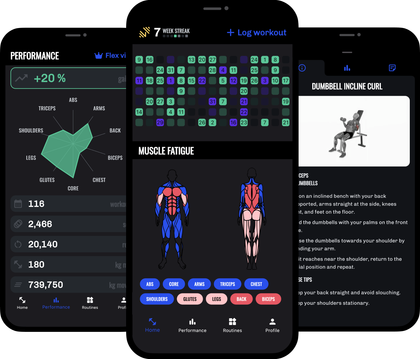
Track sets, reps, weight, rest times, RPE/RIR, and progress with Legend, on iOS and Android.
Bruce Lee-style training rewards clarity. You should know what a lift is meant to improve, how hard the set was, whether conditioning is improving, and whether the next martial arts or strength session feels better because of the plan.
Bruce Lee functional strength training is not a magic category of exercise. It is the use of strength work to improve a real performance goal. For Lee, that goal was martial arts.
That changes the way the routine is organized:
The best modern version is not the longest version. A 45-60 minute session done consistently will help more lifters than a romantic copy of a multi-session daily schedule. Lee’s lesson is not that you should train all day. It is that every part of training should serve the athlete you are trying to become.
Lee’s signature exercises make the most sense as categories: press, squat, hinge, pull, brace, run, and skip. The exact variation can change, especially if a safer exercise substitute keeps the same training goal without irritating your joints.
Before jumping into the routines, it helps to understand the exercise choices. Bruce Lee’s training evolved toward simple full-body patterns: press, squat, hinge, pull, curl, brace, run, and skip.
The clean and press was the most athletic lift in the classic routine. It combines a pull from the floor, a catch or transition to the shoulders, and an overhead press. That makes it a useful symbol of Lee’s training philosophy: strength, coordination, speed, and total-body timing.
Most lifters should not rush into heavy clean and presses. If you have not learned the clean, use a strict press, push press, kettlebell clean and press, or dumbbell clean and press. The goal is repeatable power, not messy reps.
The squat gave Lee a simple way to train the legs, hips, trunk, and bracing. In a martial arts context, stronger legs can support stance changes, kicking balance, jumping, and acceleration.
Use a squat style you can repeat. A high-bar squat, front squat, goblet squat, or safety-bar squat can all fit the lesson. Keep the reps controlled and stop before the set turns into a form breakdown.
Barbell Squat
The bench press trained horizontal pressing strength. For a martial artist, that does not mean a bench press directly becomes a punch. It means the chest, shoulders, and triceps get stronger in a movement that is easy to load and measure.
Use a controlled touch point, stable shoulder blades, and a rep range that leaves enough recovery for the rest of the week.
Barbell Bench Press
Pull-overs are a classic movement from Lee’s era. They train a long shoulder range and can involve the lats, chest, serratus, and trunk when performed under control.
They are useful only when your shoulders tolerate them. Keep the rib cage down, use a light to moderate load, and avoid forcing a range you cannot control.
Dumbbell Pull-Over
The good morning is the most important exercise in this article to treat with respect. It trains the posterior chain through a loaded hip hinge, but it is also unforgiving when the load is too heavy or the warm-up is poor.
Use it as a light to moderate accessory lift, not an ego lift. Many lifters will be better served by Romanian deadlifts, hip hinges, back extensions, or cable pull-throughs.
Barbell Good Morning
The barbell curl appears in the classic routine because Lee did not avoid direct arm training. Stronger elbows, biceps, and forearms can support grappling, pulling, and general upper-body resilience.
Keep the curl strict enough that you can compare it week to week. Swinging the bar turns the set into a lower-back movement and removes the main reason to include it.
Barbell Bicep Curl
Rows support the lats, upper back, grip, and posture. For martial artists, strong pulling is useful because the upper back helps stabilize the shoulder and control the arm during striking, clinching, and grappling positions.
Keep the torso angle consistent. If every rep gets more upright, the weight is too heavy or fatigue is too high.
Barbell Bent-Over Row
Pull-ups fit Lee-style training because they combine relative strength, grip, lats, biceps, and trunk control. They also make it easy to see whether bodyweight strength is improving.
Use assisted pull-ups, band assistance, or pulldowns if needed. The useful standard is honest range of motion and steady progression, not pretending every rep is clean.
Pull-Up
Lee put major emphasis on the midsection, but the modern lesson is not that every core set has to be extreme. The useful lesson is that the trunk has to brace, rotate, resist movement, and transfer force.
Use hanging knee raises, planks, side planks, dead bugs, cable chops, and controlled sit-up variations. Progress range of motion and control before chasing harder variations.
Hanging Knee Raise
Running and jump rope are not accessories in a Bruce Lee-inspired plan. They are part of the athletic base. Running builds aerobic capacity and the ability to recover between efforts. Jump rope supports rhythm, footwork, calf endurance, and coordination.
Do not turn conditioning into punishment. Start with a level that lets you recover for lifting and skill practice. A few well-placed runs or jump-rope sessions are more useful than adding cardio until every strength workout gets worse.
This version keeps the spirit of Lee’s training while fitting a realistic weekly schedule. It assumes you are lifting for strength and muscle, but also care about conditioning and movement quality.
| Day | Focus | Main Work |
|---|---|---|
| Monday | Full-Body Strength A | Squat, bench press, row, core |
| Tuesday | Conditioning + Mobility | Easy run or jump rope, stretching |
| Wednesday | Full-Body Strength B | Clean and press variation, pull-up, hinge, curl |
| Thursday | Skill or Recovery | Martial arts practice, mobility, or rest |
| Friday | Full-Body Strength C | Squat variation, press, pullover, core |
| Saturday | Conditioning | Fartlek run, intervals, or jump rope |
| Sunday | Recovery | Walk, mobility, or full rest |
If you practice martial arts, place the hardest skill sessions away from the hardest lifting days when possible. If you do not practice martial arts, use those slots for mobility, low-intensity conditioning, or recovery.
| Exercise | Sets | Reps | Rest |
|---|---|---|---|
| Barbell Squat | 3 | 5-8 | 2-3 min |
| Barbell Bench Press | 3 | 6-8 | 2 min |
| Barbell Bent-Over Row | 3 | 8-10 | 90-120s |
| Hanging Knee Raise | 3 | 8-15 | 60-90s |
| Plank | 3 | 30-60s | 60s |
| Exercise | Sets | Reps | Rest |
|---|---|---|---|
| Clean and Press Variation | 3 | 3-6 | 2-3 min |
| Pull-Up or Assisted Pull-Up | 3 | 5-10 | 2 min |
| Romanian Deadlift or Light Good Morning | 2-3 | 8-10 | 2 min |
| Barbell Curl | 2-3 | 8-12 | 60-90s |
| Side Plank | 2 | 30-45s each side | 60s |
| Exercise | Sets | Reps | Rest |
|---|---|---|---|
| Front Squat or Goblet Squat | 3 | 8-10 | 2 min |
| Overhead Press or Push Press | 3 | 5-8 | 2 min |
| Dumbbell Pull-Over | 2-3 | 10-12 | 90s |
| Cable Row or Barbell Row | 2-3 | 10-12 | 90s |
| Dead Bug or Cable Chop | 3 | 8-12 each side | 60s |
| Option | Session | Notes |
|---|---|---|
| Easy run | 20-40 minutes | Keep it conversational. Build the aerobic base. |
| Fartlek run | 20-30 minutes | Mix easy running with short faster bursts. |
| Jump rope | 10-20 minutes | Use short rounds with rest. Keep footwork crisp. |
| Bike or incline walk | 20-40 minutes | Good option when joints need lower impact. |
The classic Bruce Lee strength routine is usually presented as a short full-body barbell session performed three times per week. It is simple, efficient, and surprisingly modern in its structure.
| Exercise | Sets | Reps | Practical Note |
|---|---|---|---|
| Clean and Press | 2 | 8 | Use a learned variation. Substitute strict press if needed. |
| Barbell Squat | 2 | 12 | Moderate load, repeatable depth, no grinding. |
| Barbell Pullover | 2 | 8 | Use dumbbells if that feels better on the shoulders. |
| Barbell Bench Press | 2 | 6 | Keep the reps crisp and controlled. |
| Good Morning | 2 | 8 | Treat as a light hinge unless you are technically prepared. |
| Barbell Curl | 2 | 8 | Strict form and repeatable reps. |
This routine works because it is small. It gives you a press, squat, upper-body pull-over pattern, horizontal press, hinge, and curl without burying the rest of the week.
The mistake is making every set maximal. The historical template is better treated as moderate, repeatable strength practice. If you want to train martial arts, run, or do jump rope around it, keep most sets around RPE 7-8 and leave 1-3 reps in reserve.
Another routine commonly linked to Lee’s training notes includes more upper-body pulling and pressing:
| Exercise | Sets | Reps |
|---|---|---|
| Clean and Press | 2 | 8-12 |
| Barbell Curl | 2 | 8-12 |
| Behind-the-Neck Press | 2 | 8-12 |
| Upright Row | 2 | 8-12 |
| Barbell Squat | 2 | 12-20 |
| Barbell Row | 2 | 8-12 |
| Bench Press | 2 | 8-12 |
| Barbell Pullover | 2 | 8-12 |
For modern lifters, the behind-the-neck press is optional at best. Many people will do better with a standard overhead press, dumbbell press, landmine press, or machine shoulder press.
The Bruce Lee routine becomes useful when it is scaled to your actual recovery, skill level, and equipment.
Start with 2-3 full-body sessions per week and keep conditioning easy. Learn the squat, hinge, row, press, and pull-up progression before adding complex lifts.
Use this rule: if the next session is worse because the previous one was too hard, reduce the workload before adding more exercises.
Use the practical 3-day split for 8-12 weeks. Add small amounts of weight or reps when form stays consistent. Keep hard conditioning away from heavy lower-body days where possible.
This is the sweet spot for most people. The routine feels athletic without turning into a second job.
You can run a classic block for 4-6 weeks, but watch fatigue closely. Advanced lifters can create more stress from fewer sets because the loads are heavier and the technique demands are higher.
Use deloads, rotate exercises, and keep the hinge work honest. A heavy good morning is not required for the routine to be effective.
| Historical Exercise | Safer or Simpler Alternative | Why |
|---|---|---|
| Clean and Press | Strict press, push press, dumbbell clean and press | Keeps pressing power without forcing Olympic-lift skill. |
| Behind-the-Neck Press | Overhead press, dumbbell press, landmine press | Easier for many shoulders. |
| Good Morning | Romanian deadlift, back extension, hip hinge drill | Keeps posterior-chain work with lower technical risk. |
| Barbell Pullover | Dumbbell pullover, cable pullover | Easier to control range and shoulder position. |
| High-frequency core work | 2-4 focused core sessions per week | Builds the trunk without irritating the hip flexors or lower back. |
Bruce Lee-inspired training needs a logbook. The routine is too mixed to manage by memory alone.
Use these rules:
The simplest progression is double progression. Choose a rep range, such as 6-8. When every set reaches the top of the range with clean form, add a small amount of weight next time.
Bruce Lee’s diet is often discussed with too much drama. The practical lesson is simpler: he ate to support a high-output life.
For modern lifters, focus on the basics:
If the goal is a lean, athletic physique, the training has to be matched with recovery. That means enough total food, enough sleep, and enough easy days to make hard days productive.
The Bruce Lee workout routine is a functional strength and conditioning approach built around full-body weight training, martial arts practice, running, jump rope, core work, and mobility. A practical version uses 3 full-body strength sessions per week plus 2-3 conditioning or skill sessions.
Yes. Bruce Lee used weight training, including full-body barbell routines. His most commonly cited routine includes clean and press, squat, pullover, bench press, good morning, and barbell curl.
Lee often trained many days per week because martial arts, conditioning, flexibility, and strength work were part of his life and career. Most modern lifters should start with 3 lifting days and 2-3 conditioning or skill days rather than copying his total workload.
The classic short routine is usually listed as clean and press, squat, pullover, bench press, good morning, and barbell curl for 2 sets each. It is best treated as a moderate full-body strength session, not a max-effort workout.
The idea is good for beginners, but the historical routine needs scaling. Beginners should learn basic movement patterns, use lighter loads, choose safer substitutions, and keep conditioning easy enough to recover from.
Yes, if you adapt the equipment. Use dumbbell presses, goblet squats, dumbbell rows, push-ups, pull-up progressions, jump rope, running, and core work. A barbell is useful but not required for a Bruce Lee-inspired routine.
Yes. Running and jump rope were important parts of his conditioning. A modern version can use easy runs, fartlek runs, jump rope rounds, cycling, or incline walking depending on your joints and sport needs.
Lee was known for frequent core training, but that does not mean every lifter should do high-volume abs daily. Most people do better with 2-4 focused core sessions per week, plus bracing practice during compound lifts.
Only if you have the technique and recovery for them. Good mornings can be useful, but they are not mandatory. Romanian deadlifts, back extensions, and lighter hinge patterns preserve the lesson with less risk for many lifters.
It can build muscle, especially for lifters who are newer to structured strength training. It is not a pure bodybuilding routine. The goal is an athletic blend of strength, conditioning, mobility, and skill.
Log each lift with sets, reps, weight, rest time, and RPE or RIR. Keep conditioning and mobility notes simple, then review whether strength, energy, and performance are improving across weeks.
Run a practical version for 8-12 weeks before making major changes. That is long enough to see whether lifts, conditioning, and recovery are improving. If performance is flat for several weeks, reduce volume or intensity before adding more work.
Lift more.
See progress.
Get consistent.
Legend is the most intuitive workout tracker for iOS and Android.


Scan on iPhone


Scan on Android