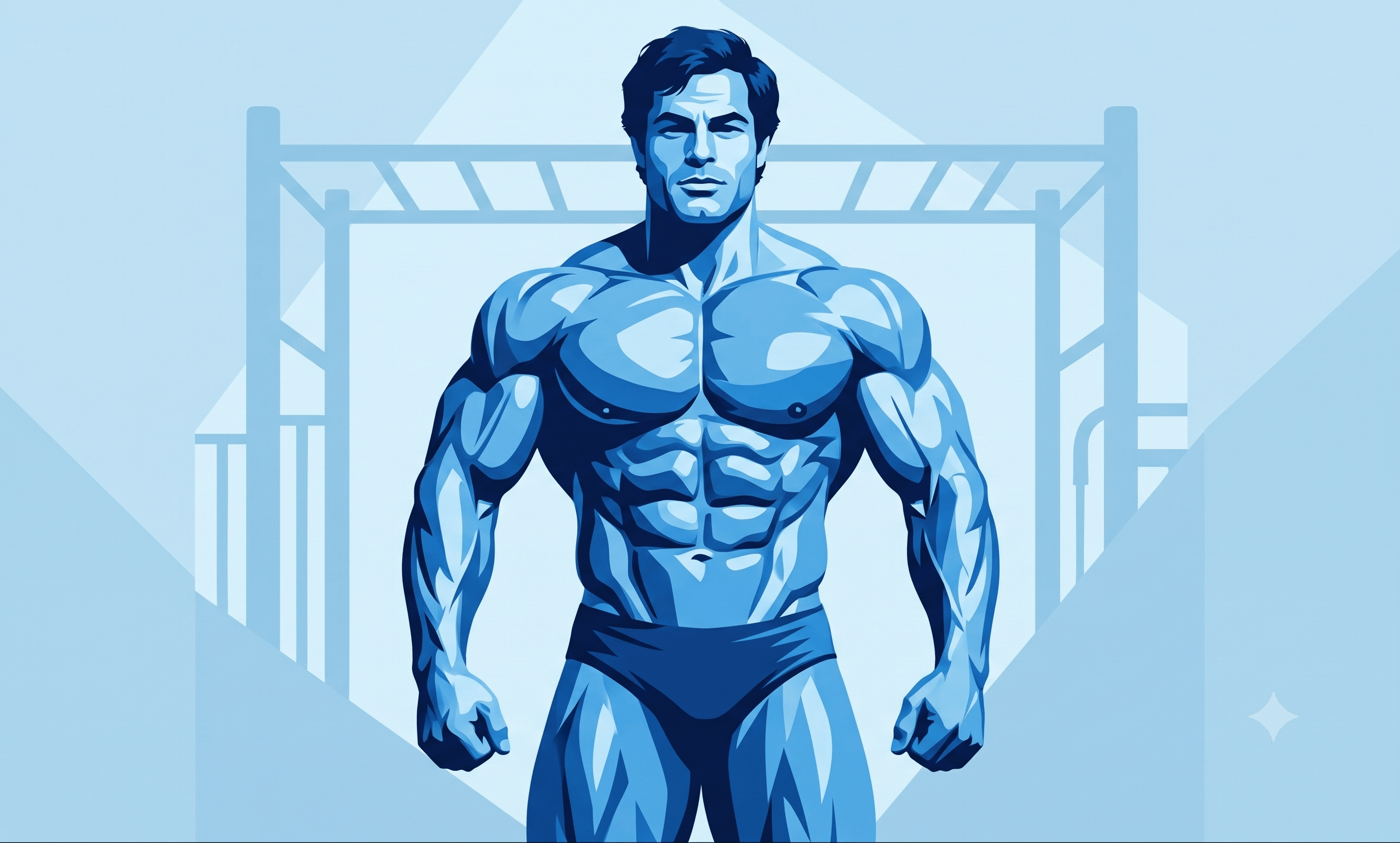
Franco Columbu was one of the most unusual athletes of the golden era. Known as the Sardinian Strongman, he was not only a bodybuilder with two Mr. Olympia titles. He was also a boxer, weightlifter, powerlifter, chiropractor, author, and actor.
Columbu was born in 1941 in Ollolai, Sardinia. His early life was far from the polished image of Venice Beach bodybuilding. He grew up around hard physical work, then entered sport through boxing before moving deeper into weight training, weightlifting, powerlifting, and eventually bodybuilding.
His bodybuilding story is inseparable from Arnold Schwarzenegger. The two met in Europe, trained together, moved to California in the Joe Weider era, and became one of the most famous training partnerships in bodybuilding. They also worked manual jobs together, including the European Brick Works business, while building the careers that made them golden-era icons.
Columbu won the 1976 Mr. Olympia, returned from a severe 1977 World’s Strongest Man knee injury, and won the 1981 Mr. Olympia before retiring from competition. That arc is why lifters still search for the Franco Columbu workout routine. It is a story about dense muscle, heavy basics, and unusual strength for his size.
There is one important caveat. Some of Columbu’s most famous reported lifts vary by source, and exact numbers from that era are difficult to verify. The practical point does not depend on treating every old number as perfect. Columbu was clearly strong, clearly well-rounded, and clearly built his physique through a blend of heavy lifting and bodybuilding volume.
Franco Columbu’s training still matters because it shows a version of bodybuilding that was not separated from strength. He did not train only for a pump, and he did not train only for one-rep maxes. His best routines mixed heavy compound lifts, repeated bodybuilding sets, supersets, and enough frequency to practice the same movements often.
That makes him a useful model for modern powerbuilding. The goal is to build muscle while still getting stronger on the lifts that matter. Bench presses, squats, deadlifts, rows, chins, curls, calf raises, and direct isolation all have a place when the routine is organized and recovery is taken seriously.
The mistake is copying the most extreme version immediately. Columbu’s classic split used a demanding 14-day structure and often included twice-a-day training. That can be useful history, but it is not a normal starting point. Most lifters need a smaller version that keeps the lesson without inheriting all of the fatigue.
This guide keeps the useful parts of Columbu’s approach: heavy basics, supersets that make sense, bodybuilding volume that can be tracked, and a practical way to scale the work.
The Franco Columbu workout routine is a powerbuilding approach that combines strength-focused compound lifts with high-volume bodybuilding work, frequent body-part training, and strategic supersets.
Use Columbu’s training as a powerbuilding reference: heavy basics, targeted bodybuilding work, and supersets that save time without turning every lift into a conditioning test.
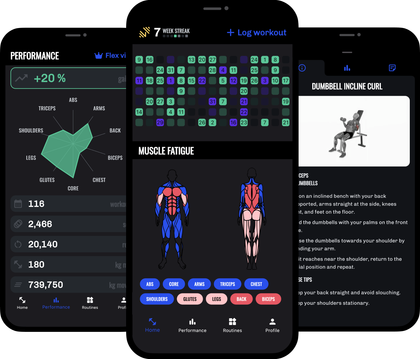
Track sets, reps, weight, rest times, RPE/RIR, supersets, and progress with Legend, on iOS and Android.
Columbu-style training rewards honest tracking. If bench, squat, row, deadlift, and leg press performance are improving over weeks, the routine is doing its job. If every session feels heroic but the logbook is flat, the workload is too high or recovery is too low.
Franco Columbu powerbuilding is the practical blend of strength work and physique work:
The key is order. Start with the lift that needs the most skill and load. Then move into accessories that build the muscle groups around it. That might mean bench press before cable flyes, pull-ups before rows, squats before leg press, or deadlifts before lighter back work.
The classic Columbu routine also used a lot of supersets. Supersets can be useful, but they need to be chosen carefully and logged clearly in the workout tracking flow. Pairing cable flyes with pressing, or curls with triceps work, can make a session more efficient. Supersetting two lifts that both require heavy bracing is usually a poor tradeoff.
Columbu’s exercise menu makes sense when you view it through powerbuilding: a heavy basic lift, then enough targeted work to build the physique around it. That is also why exercise substitutions matter if dips, pullovers, or very high-volume squats do not fit your joints.
Before jumping into the routine, it helps to understand the exercise choices. Columbu’s training was not random variety. It relied on repeatable basics that could be loaded, tracked, and paired with targeted accessory work.
The bench press was a cornerstone of Columbu-style chest training because it connected strength and physique work. In the classic routine, it often appeared in a descending rep pattern, moving from higher reps toward heavier sets.
For most lifters, the practical version is simple: use a controlled lower, keep your shoulder blades stable, and progress within a rep range before adding load.
Barbell Bench Press
Fly variations gave Columbu’s chest work direct isolation after the heavier press. They are useful because they let you train the chest through a long range without needing another heavy barbell movement.
Use a load you can control. The goal is not to turn the fly into a press. Keep the elbows slightly bent, stretch under control, and bring the hands together without losing the chest contraction.
Cable Pec Fly
Pullovers and dips are classic golden-era upper-body exercises. The pullover trains a long-range shoulder-extension pattern that can involve the chest, lats, and serratus. Dips load the chest, triceps, and shoulders together.
They are useful only when your shoulders tolerate them. If pullovers or dips irritate the front of the shoulder, use a shorter range, a lighter load, or swap to a press or pulldown variation.
Dumbbell Pull-Over
Columbu’s back training mixed vertical pulling with horizontal rowing. Pull-ups build the lats and upper back through bodyweight control. Seated cable rows make mid-back work easier to load and repeat.
Do not let the lower back turn every row into a heave. Brace, pull with the back, pause briefly, and keep the set honest enough that the same reps can be compared next week.
Cable Seated Row
The deadlift is the lift most strongly tied to Columbu’s reputation for strength. It trained the posterior chain, back, grip, and bracing in one movement.
For modern lifters, deadlift volume should be treated carefully. A few hard sets are enough. Keep reps clean, stop before form breaks down, and avoid pairing heavy deadlifts with another high-fatigue lift in the same superset.
Barbell Deadlift
The squat anchors the lower-body side of the routine. Columbu’s reported strength numbers were exceptional, but the practical lesson is simpler: build leg size and total-body strength by repeating a stable squat pattern over time.
Use a stance and depth you can repeat. Add load only when the reps stay consistent and your lower back is not taking over the lift.
Barbell Squat
The leg press gave Columbu-style leg training a way to accumulate hard quad volume after squats. It is easier to stabilize than a barbell squat, which makes it useful when the goal is repeated high-effort leg work.
Keep the range controlled and avoid turning every rep into a shallow lockout. The leg press is valuable because you can compare load, reps, depth, and foot position from session to session.
Machine Leg Press
Direct shoulder work helped create the width and detail that supported Columbu’s compact, dense look. Lateral raises train the side delts. Rear delt flyes help cover the back of the shoulder and support upper-back balance.
Use strict reps here. If the hips and traps are doing the work, reduce the load and make the target muscle obvious again.
Dumbbell Lateral Raise
Columbu’s arm work often used antagonist supersets, pairing biceps and triceps movements. Preacher curls and dumbbell curls are simple, repeatable biceps lifts that make cheating easier to notice.
The practical rule is to keep the upper arm controlled, use a full but comfortable range, and avoid adding weight by turning curls into a lower-back exercise.
Barbell Preacher Curl
Calves were a serious part of golden-era training. Standing calf raises train the calves with the knees straight, while seated calf raises train them with the knees bent.
Use a deep stretch, a clear top position, and enough reps to make the set measurable. Bouncing through the bottom makes the exercise easier to log but harder to trust.
Barbell Standing Calf Raise
This version keeps the Columbu principles and removes the part that most lifters cannot recover from: twice-a-day frequency. Run it 3-4 days per week for 6-10 weeks.
| Exercise | Sets | Reps | Rest |
|---|---|---|---|
| Barbell Bench Press | 4 | 6-8 | 2-3 min |
| Pull-Up or Lat Pulldown | 4 | 6-10 | 2 min |
| Cable Pec Fly | 3 | 12-15 | 60-90s |
| Cable Seated Row | 3 | 8-12 | 90s |
| Dumbbell Lateral Raise | 3 | 12-20 | 60s |
| Barbell Preacher Curl | 3 | 8-12 | 60-90s |
| Triceps Pressdown or Dip | 3 | 8-12 | 60-90s |
| Exercise | Sets | Reps | Rest |
|---|---|---|---|
| Barbell Squat | 4 | 5-8 | 2-3 min |
| Machine Leg Press | 3 | 10-15 | 2 min |
| Barbell Romanian Deadlift | 3 | 8-10 | 2 min |
| Machine Leg Curl | 3 | 10-15 | 90s |
| Standing Calf Raise | 4 | 10-15 | 60-90s |
| Hanging Leg Raise or Crunch | 3 | 10-20 | 60s |
| Exercise | Sets | Reps | Rest |
|---|---|---|---|
| Barbell Incline Bench Press | 3 | 8-10 | 2 min |
| Barbell Bent-Over Row | 4 | 8-10 | 2 min |
| Dumbbell Chest Fly | 3 | 12-15 | 60-90s |
| Dumbbell Pull-Over | 3 | 10-15 | 90s |
| Dumbbell Rear Delt Fly | 3 | 12-20 | 60s |
| Dumbbell Curl | 3 | 10-12 | 60s |
| Overhead Triceps Extension | 3 | 10-12 | 60s |
Use this day only if the first three sessions are recovering well.
| Exercise | Sets | Reps | Rest |
|---|---|---|---|
| Barbell Deadlift | 3 | 3-6 | 3 min |
| Front Squat or Hack Squat | 3 | 8-10 | 2 min |
| Cable Seated Row | 3 | 10-12 | 90s |
| Walking Lunge | 2 | 10-12 each leg | 90s |
| Seated Calf Raise | 4 | 12-20 | 60s |
| Side Plank | 3 | 30-45s each side | 60s |
If you train three days per week, alternate Day 4 in every other week. That keeps deadlift exposure without forcing every week to carry the same lower-back fatigue.
The classic split is useful as history and as an advanced template. The historical 14-day outline below follows the cited Set for Set schedule, where // means the day may be divided into separate AM and PM sessions. It is not the best starting point for most lifters.
| Day | Training |
|---|---|
| Day 1 | Chest, shoulders, abs // Arms |
| Day 2 | Back // Legs |
| Day 3 | Chest, shoulders, abs // Arms |
| Day 4 | Arms |
| Day 5 | Legs, abs // Back |
| Day 6 | Chest, shoulders, abs |
| Day 7 | Rest |
| Day 8 | Arms // Legs |
| Day 9 | Back, abs |
| Day 10 | Chest, shoulders // Arms |
| Day 11 | Back, abs // Legs |
| Day 12 | Chest, shoulders, abs |
| Day 13 | Arms |
| Day 14 | Rest |
The classic body-part workouts commonly linked to Columbu include:
| Exercise | Sets | Reps |
|---|---|---|
| Barbell Bench Press | 3 | 15, 10, 4 |
| Cable Crossover | 3 | 20 |
| Dumbbell Fly | 3 | 20, 15, 6 |
| Cable Crossover | 3 | 20 |
| Incline Bench Press | 3 | 15 |
| Dumbbell or Barbell Pullover | 3 | 15 |
| Parallel-Bar Dip | 3 | Near failure |
| Exercise | Sets | Reps |
|---|---|---|
| Wide-Grip Pull-Up | 5-6 | 10-15 |
| T-Bar Row or Landmine Row | 4 | 8-10 |
| Cable Seated Row | 4 | 8-10 |
| One-Arm Dumbbell Row | 3 | 10 |
| Pull-Up or Neutral-Grip Pulldown | 3 | 10 |
| Exercise | Sets | Reps |
|---|---|---|
| Barbell Squat | 5-7 | 20, 15, 10, 8, 6, 4, 2 |
| Machine Leg Press | 4 | 50, 25, 15, 8 |
| Leg Extension | 4-6 | 12-20 |
| Barbell Lunge | 2-3 | 12-15 |
| Barbell Deadlift | 3-6 | 5, 5, 3, 3, 1 |
| Standing Calf Raise | 4-5 | 15-20 |
| Exercise | Sets | Reps |
|---|---|---|
| Dumbbell Lateral Raise | 4 | 10-15 |
| Dumbbell Rear Delt Fly | 4-6 | 10-15 |
| Overhead Press Variation | 3-4 | 8-10 |
| Cable Pressdown | 4 | 8-12 |
| Dumbbell Curl | 4 | 8-12 |
| Barbell Preacher Curl | 4 | 8-12 |
| Overhead Triceps Extension | 3-4 | 8-12 |
The best starting version is three days per week. That gives you enough frequency to practice the main lifts and enough rest to see whether performance improves.
If three days are easy to recover from, add one or two sets to a weak area before adding a full extra training day. More days create more scheduling and recovery pressure.
Deadlifts can be productive, but they are expensive. Use fewer sets than the classic routine and track whether deadlift work hurts squats, rows, or the next week’s performance.
Superset curls and triceps, flyes and light raises, or calves and abs. Do not rush heavy squats, heavy deadlifts, or heavy bench sets just to make the workout feel harder.
Shoulder-heavy golden-era exercises are not mandatory. If dips, pullovers, or behind-the-neck pressing irritate your shoulders, use a safer substitute and keep progressing.
For most lifts, choose a range such as 6-8, 8-10, or 10-15. When all sets reach the top of the range with stable form and similar rest, add a small amount of weight.
Rest time changes the difficulty of the set. A bench press done after 60 seconds of rest is not the same as a bench press done after three minutes. Log rest times so progress means something.
Hard training matters, but most heavy compound sets should stop before form collapses. Isolation movements can be pushed harder because the cost is lower.
If loads, reps, sleep, motivation, and joint comfort all drop together, reduce volume for a week. A smaller week can keep the next block productive.
Before adding exercises, check whether the current lifts are progressing. If they are, keep going. If they are not, adjust volume, rest, effort, or recovery before expanding the routine.
Columbu is often associated with whole-food, Mediterranean-influenced eating: eggs, yogurt, fruit, vegetables, fish, meat, cheese, and simple meals that supported hard training. The modern lesson is not to copy every food choice. It is to eat enough protein, enough total food, and enough carbohydrates to train hard and recover.
For most lifters, a useful protein target is roughly 1.6-2.2 grams per kilogram of body weight per day. Carbohydrates can be adjusted around training volume. If leg days and deadlift days are dragging, under-fueling is one of the first things to check.
Do not make the diet more complex than the training. Hit protein, eat mostly nutrient-dense foods, keep bodyweight moving in the direction of the goal, and adjust based on performance.
The classic split is advanced. Most lifters will make better progress from three or four well-recovered sessions than from a huge plan that is impossible to repeat.
Columbu’s strength was exceptional. Your routine should be based on your current ability, not on chasing numbers from a different athlete, era, and context.
Supersets are useful for accessories. They are usually a poor choice for heavy squats, deadlifts, and technical pressing where rest and bracing quality matter.
Golden-era routines often used dips, pullovers, and behind-the-neck pressing. Keep the movements your shoulders tolerate and replace the ones they do not.
A hard session is only useful if it helps the next few weeks improve. The logbook matters more than how dramatic the workout felt.
The Franco Columbu workout routine is a powerbuilding plan that combines heavy compound lifts, bodybuilding accessories, supersets, and frequent body-part training. The practical version works well as a 3-4 day split. The classic version is a demanding 14-day split.
The full classic routine is not a good beginner plan. Beginners should use a simpler full-body or upper-lower routine, learn the main lifts, and build consistency before adding Columbu-style volume.
The classic Columbu split is usually presented as a 14-day cycle with multiple twice-a-day sessions and rest days on Days 7 and 14. Most modern lifters should start with 3-4 days per week.
Powerbuilding is a training style that combines strength-focused compound lifts with bodybuilding volume. The goal is to get stronger and build muscle, not to choose one at the expense of the other.
Common Franco Columbu exercises include bench presses, flyes, pullovers, dips, pull-ups, rows, squats, leg presses, lunges, deadlifts, lateral raises, curls, triceps extensions, calf raises, and ab work.
Yes, the classic routine is commonly described with morning and evening sessions on several days. That does not mean every lifter should train twice a day. The practical version keeps the training principles and lowers the frequency.
Use supersets for accessory work such as curls and triceps, flyes and raises, or calves and abs. Avoid rushing heavy compound lifts where rest quality affects performance and safety.
Use rep ranges. When you can complete all sets at the top of the range with clean form and consistent rest, add a small amount of weight. If performance drops, reduce volume before adding more work.
Yes. Use squats, split squats, Romanian deadlifts, dumbbell presses, dumbbell flyes, rows, pull-ups, curls, extensions, and standing calf raises. Machines are useful, but the routine can be adapted.
Use 2-3 minutes for heavy compound lifts, 60-90 seconds for most accessory lifts, and shorter rests only when form and performance stay consistent.
Create the routine once, log every set, keep rest times consistent, record RPE or RIR, and review exercise history before adding more volume. If your heavy lifts are not improving, adjust recovery before expanding the plan.
Yes, he was unusually strong for a bodybuilder of his size. Some exact historical numbers vary by source, but his reputation as one of bodybuilding’s great strength athletes is well supported.
Franco Columbu’s routine is inspiring because it joined strength and bodybuilding instead of treating them as separate worlds. Heavy basics built the foundation. Supersets and accessory work filled in the physique. Recovery determined whether the work could be repeated.
The smart way to use it is to start with the practical powerbuilding split, track every workout, and add volume only when your performance proves you can recover from it.
Lift more.
See progress.
Get consistent.
Legend is the most intuitive workout tracker for iOS and Android.


Scan on iPhone


Scan on Android