Mike Mentzer (1951-2001) was an IFBB professional bodybuilder, author, and one of the most argued-about training thinkers in bodybuilding history. He was not just known for a physique. He was known for a point of view: train with purpose, measure what happens, recover fully, and stop confusing more work with better work.
His competitive record gave that philosophy weight. Mentzer won the 1976 IFBB Mr. America, the 1978 IFBB Mr. Universe with a perfect score, and the 1979 Mr. Olympia heavyweight division. He also became closely associated with the controversy around the 1980 Mr. Olympia, after which his competitive career effectively gave way to writing, coaching, and refining his Heavy Duty training system.
The reason people still search for Mike Mentzer workouts is not nostalgia alone. His ideas speak to a real problem in lifting: many people add sets, exercises, and training days before they know whether the work they already do is productive. Mentzer pushed the opposite question. What is the least amount of high-quality training you can do while still recovering and getting stronger?
Heavy Duty still matters because it was a reaction against the idea that more training is always better. Mentzer argued for brief, infrequent, high-effort workouts built around progressive overload and recovery. That made his system appealing to lifters who were tired of marathon bodybuilding sessions, stalled progress, and routines that looked impressive on paper but were hard to recover from.
The useful lesson is not that every lifter should copy Mentzer exactly. It is that effort, recovery, and progression need to be tracked together. A low-volume routine only works if the working sets are hard enough, form is controlled enough, and recovery is good enough for performance to improve the next time.
This guide keeps the practical parts of Heavy Duty for modern lifters: simple exercise selection, hard working sets, rest days that matter, and a logbook-focused way to tell whether the routine is working.
Mike Mentzer’s Heavy Duty routine is a low-volume, high-effort bodybuilding approach built around hard working sets, long recovery periods, and measurable progression.
Use Heavy Duty as a decision-making system, not a dare. The routine only makes sense when high effort, low volume, and recovery all show up in the logbook together.
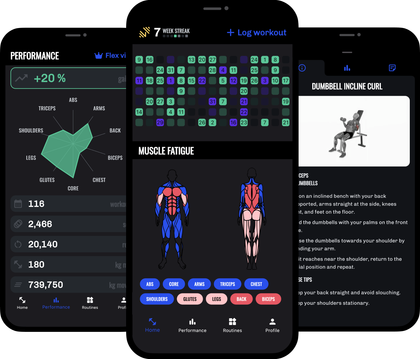
Track sets, reps, weight, rest times, RPE/RIR, and progress with Legend, on iOS and Android.
Heavy Duty still needs careful framing. Training to true failure, using forced reps, or resting a full week between sessions can work for some advanced lifters, but it is not required for everyone. Current resistance training guidance still puts consistency, individualization, adequate weekly volume, and safety ahead of any single perfect routine.
Heavy Duty is Mentzer’s version of high-intensity training. The main principles are:
The mistake is treating the most extreme version as the starting point. For most lifters, Heavy Duty works better when it begins with controlled effort, clean form, and one or two reps in reserve. You can move closer to failure later if recovery, joints, and performance are holding up.
Favorite here does not mean a perfect ranked list. It means the exercises most strongly associated with Mentzer’s Heavy Duty routines, seminars, and later recommendations.
Before jumping into the routines, it helps to understand the kind of exercises Mentzer kept coming back to. He eventually preferred simple, high-output movements that made progression obvious and kept the routine short. That is the common thread below: each exercise either creates a lot of stimulus from very little volume, or it helps set up a harder compound lift.
Mentzer used fly-style movements for chest pre-exhaustion before a press. The point was not to chase a pump for its own sake. It was to fatigue the chest directly, then move into a compound press while the chest was already the limiting muscle.
Dumbbell Chest Fly
The incline press is one of the main chest presses in the Ideal Routine. It fits the Heavy Duty idea because it can be loaded, tracked, and progressed clearly. Paired after fly work, it lets a lifter train chest hard without turning the workout into several rounds of overlapping presses.
Barbell Incline Bench Press
The close-grip, palms-up pulldown is one of the back exercises most linked to Heavy Duty. It trains the lats hard while also giving the biceps meaningful work, which is exactly the kind of overlap Mentzer liked when the goal was a short session.
Cable Lat Pull-Down
The deadlift is a brutally efficient back and posterior-chain lift. In Mentzer-style programming, it appears because one hard, well-executed set can create a large training effect. That also means it should be treated with respect: near failure is very different from sloppy failure.
Barbell Deadlift
This is the lower-body version of Mentzer’s pre-exhaustion idea. The leg extension targets the quads first, then the leg press or squat loads the whole lower body. Done well, it makes the compound lift more demanding without requiring endless extra sets.
Machine Leg Press
The standing calf raise is direct, simple, and easy to progress. That makes it a natural fit for a low-volume routine. You can load it, pause in the stretched position, track reps cleanly, and know whether the set actually improved.
These direct shoulder movements help cover the side and rear delts without turning shoulder training into a long session. They also make sense in a Heavy Duty routine because the target muscle is obvious. If the set turns into swinging, the exercise has stopped doing its job.
For arms, Mentzer’s later routines often stayed simple: a curl for elbow flexion and a pressdown or dip pattern for elbow extension. The value is not novelty. It is clean execution, a hard working set, and a logbook that tells you whether the lift is moving forward.
The parallel-bar dip is a high-output upper-body movement that trains triceps, chest, and shoulders together. It fits the Heavy Duty style when your shoulders tolerate it and your form stays controlled. If dips bother your shoulders, a pressdown is usually the better choice.
Chest Dip
The pattern matters more than the exact exercise list. Mentzer favored exercises that could be loaded safely, performed strictly, tracked clearly, and recovered from before the next workout. If you keep that filter, the routine becomes easier to adapt without losing the Heavy Duty idea.
Start here if you want the Mentzer-style lesson without jumping straight into the most extreme version.
Train 2-3 days per week. Keep at least one full rest day between sessions. For each exercise, perform warm-up sets first, then one hard working set. Stop the working set when form would break or when you reach about RPE 8-9.
| Exercise | Warm-Up Sets | Working Sets | Reps | Notes |
|---|---|---|---|---|
| Dumbbell Fly or Pec Deck | 1-2 | 1 | 8-12 | Controlled stretch, no bouncing |
| Incline Press | 1-2 | 1 | 6-10 | Add weight only when reps are clean |
| Lat Pulldown or Pull-Up | 1-2 | 1 | 6-10 | Use full range of motion |
| Barbell Row or Chest-Supported Row | 1-2 | 1 | 6-10 | Keep torso position stable |
| Exercise | Warm-Up Sets | Working Sets | Reps | Notes |
|---|---|---|---|---|
| Leg Extension | 1 | 1 | 10-15 | Use as quad-focused pre-fatigue if tolerated |
| Leg Press or Squat | 2-3 | 1 | 8-12 | Do not grind through knee, hip, or back pain |
| Lying or Seated Leg Curl | 1-2 | 1 | 8-12 | Control the lowering phase |
| Standing Calf Raise | 1 | 1 | 12-20 | Pause in the stretched position |
| Weighted Crunch or Cable Crunch | 1 | 1 | 10-20 | Slow reps, no jerking |
| Exercise | Warm-Up Sets | Working Sets | Reps | Notes |
|---|---|---|---|---|
| Dumbbell Lateral Raise | 1 | 1 | 10-15 | Stop before swinging takes over |
| Rear Delt Raise or Reverse Pec Deck | 1 | 1 | 10-15 | Keep tension on rear delts |
| Overhead Press | 1-2 | 1 | 6-10 | Use a shoulder-friendly range |
| Barbell or Dumbbell Curl | 1 | 1 | 6-10 | Full control, no hip drive |
| Triceps Pressdown or Dip | 1 | 1 | 6-12 | Choose the version your shoulders tolerate |
If you can only train twice per week, rotate Day 1 and Day 2 in week one, then Day 3 and Day 1 in week two.
Mentzer’s Ideal Routine is a four-workout rotation. It is lower volume than typical bodybuilding splits, but it is demanding because the working sets are intended to be very hard.
Use 3-5 days of rest between these workouts at first. If your performance drops, your sleep is poor, or joints stay irritated, add rest before adding intensity.
| Exercise | Sets | Reps | Notes |
|---|---|---|---|
| Pec Deck or Dumbbell Fly | 1 | 6-10 | Pre-fatigue chest |
| Incline Press | 1 | 6-10 | Move from fly to press with minimal delay |
| Close-Grip Palms-Up Pulldown | 1 | 6-10 | Pull elbows down and in |
| Deadlift | 1 | 5-8 | Keep this near failure, not sloppy failure |
| Exercise | Sets | Reps | Notes |
|---|---|---|---|
| Leg Extension | 1 | 8-15 | Pre-fatigue quads |
| Leg Press or Squat | 1 | 8-15 | Use the option you can load safely |
| Standing Calf Raise | 1 | 12-20 | Full stretch and controlled top position |
| Weighted Crunch | 1 | 10-20 | Keep the motion strict |
| Exercise | Sets | Reps | Notes |
|---|---|---|---|
| Dumbbell Lateral Raise | 1 | 6-10 | Side delt focus |
| Rear Delt Raise | 1 | 6-10 | Posterior shoulder balance |
| Barbell Curl | 1 | 6-10 | Strict reps |
| Triceps Pressdown | 1 | 6-10 | Pre-fatigue triceps |
| Dip | 1 | 3-8 | Use assistance if needed |
| Exercise | Sets | Reps | Notes |
|---|---|---|---|
| Leg Extension | 1 | 10-15 | Hard contraction, no forced holds required |
| Squat or Leg Press | 1 | 8-15 | Stop if depth or bracing breaks down |
| Standing Calf Raise | 1 | 12-20 | Controlled reps |
This version is best for lifters who already know their technique, can warm up properly, and can track performance honestly.
The Consolidation Routine is Mentzer’s minimalist option. It strips the plan down to a few compound lifts and gives recovery even more importance.
This is not automatically better. It is simply one way to handle training if heavy sessions produce enough fatigue that more exercises become counterproductive.
| Exercise | Sets | Reps | Target |
|---|---|---|---|
| Squat or Leg Press | 1 | 8-15 | Quads, glutes, hamstrings, core |
| Close-Grip Palms-Up Pulldown | 1 | 6-10 | Lats, upper back, biceps |
| Parallel Bar Dip | 1 | 6-10 | Chest, shoulders, triceps |
| Exercise | Sets | Reps | Target |
|---|---|---|---|
| Deadlift or Trap Bar Deadlift | 1 | 5-8 | Posterior chain, back, grip |
| Overhead Press or Dip | 1 | 6-10 | Shoulders, triceps, upper chest |
| Standing Calf Raise | 1 | 12-20 | Calves |
Alternate Workout A and Workout B with 5-10 days between sessions. If performance is still improving, keep the frequency. If performance stalls for several sessions and recovery feels poor, extend rest or reduce how close you train to failure.
Heavy Duty has a high failure-training reputation, but you do not need to start at RPE 10.
| Level | Effort Target | Frequency | Best Approach |
|---|---|---|---|
| Beginner | RPE 7-8, 2-3 reps in reserve | 2-3 days per week | Learn form, use the practical routine, avoid forced reps |
| Intermediate | RPE 8-9, 1-2 reps in reserve | 2-3 days per week | Track reps and load, add rest if performance drops |
| Advanced | RPE 9-10 selectively | Every 3-7 days | Use failure sparingly, deload when joints or performance regress |
Use these rules:
Heavy Duty succeeds or fails in the logbook.
Use a simple double progression system:
Legend is useful here because the routine is sparse. Every set matters. Log the working weight, reps, rest time, and RPE/RIR. Use the plate calculator for quick loading, rest timers to avoid drifting, and exercise progress charts to check whether the minimalist approach is actually working.
Mentzer pushed back against the idea that more protein automatically means more muscle. That skepticism is useful, but modern lifters should not take it as a reason to under-eat protein.
A practical target for most exercising people is about 1.4-2.0 grams of protein per kilogram of body weight per day. Higher targets may be useful in some calorie-deficit phases, but the bigger point is simple: eat enough total food, enough protein, and enough carbohydrates to train hard and recover.
For Heavy Duty, nutrition should support recovery:
If you go from normal training straight to all-out failure on every movement, you may create more fatigue than progress. Start with hard, clean sets before chasing true failure.
Long rest only helps if performance improves. If you rest seven days and lift less each time, the plan needs adjustment.
One hard working set still needs warm-ups, focus, and honest effort. A low-volume routine is not a low-effort routine.
Some Mentzer-style routines use machines and pre-exhaustion. If your gym does not have those options, choose movements you can perform safely and progress over time.
Heavy Duty is not permission to grind through joint pain. Sharp pain, worsening pain, or pain that changes your technique is a stop signal.
Heavy Duty is a low-volume bodybuilding system built around a few hard working sets, progressive overload, and long recovery periods. The best-known versions are the Ideal Routine and the later Consolidation Routine.
Many lifters start with 2-3 sessions per week using a practical version. The more advanced Ideal Routine often uses 3-5 days of rest between workouts, while the Consolidation Routine may use 5-10 days between sessions.
One hard set can be productive, especially for experienced lifters who train with high effort. It is not the only way to build muscle, and it is not required for every lifter. Many people progress better with a little more volume and slightly less failure training.
Beginners can learn from the simplicity, but they should not start with all-out failure. A beginner version should use controlled reps, moderate loads, 2-3 reps in reserve, and enough practice volume to learn the movements.
The Ideal Routine is a four-workout rotation: chest and back, legs and abs, shoulders and arms, then a second leg-focused workout. It uses very low volume and long recovery periods.
The Consolidation Routine is an even lower-volume version that alternates two workouts built around major compound lifts like squats or leg presses, pulldowns, dips, deadlifts, presses, and calf raises.
No. If you use failure, use it selectively. Save true failure for safer movements and stop compound lifts when form breaks down.
Your logbook should show progress. If reps, weight, control, or recovery are improving over several weeks, the routine is doing its job. If performance drops repeatedly, adjust recovery, effort, exercise selection, or volume.
Mike Mentzer’s Heavy Duty routine is valuable because it forces you to take recovery and progression seriously. You do not need to copy the most extreme version to get the lesson.
Start with fewer exercises, train hard with clean form, track every working set, and let your results decide whether you need more intensity, more rest, or more volume.
With Legend, you can build the routine, log each working set, track RPE/RIR, time your rest periods, check progressive overload, and see whether your strength is actually moving in the right direction.
Lift more.
See progress.
Get consistent.
Legend is the most intuitive workout tracker for iOS and Android.


Scan on iPhone


Scan on Android