Michael Gerard Tyson was born in Brooklyn, New York, and grew up in Brownsville, Brooklyn, a difficult environment that shaped much of the story people still attach to him. Before he became a global sports figure, he was a teenager moving through trouble, instability, and reform-school life.
The turning point in the boxing story was Bobby Stewart, a former boxer and counselor who saw unusual potential in Tyson and introduced him to Cus D’Amato. D’Amato became Tyson’s trainer, guardian, and father figure. In Catskill, New York, Tyson was shaped by a training culture built around repetition, discipline, film study, fear management, and a very specific boxing style.
That style later became inseparable from Tyson’s prime. Under D’Amato and then Kevin Rooney, Tyson developed a compact, explosive version of peek-a-boo boxing: high guard, deep slips, fast entries, short hooks, uppercuts, and counters thrown from angles. It was not only about punching hard. The method demanded legs, hips, trunk rotation, neck strength, timing, and the conditioning to keep moving under pressure.
Tyson turned professional in 1985 and quickly became one of boxing’s most talked-about athletes. In 1986, after beating Trevor Berbick, he became the youngest world heavyweight champion. He later unified the WBC, WBA, and IBF heavyweight titles, which is why his name still appears in searches for heavyweight boxing, knockout power, roadwork, calisthenics, and old-school fight conditioning.
The full Tyson story is complicated, and it should not be flattened into a clean sports myth. His later life and career included serious personal, legal, and professional turmoil. This article is narrower. It looks at the training ideas associated with his prime, separates useful lessons from spectacle, and turns the Mike Tyson workout routine into something a modern lifter or combat-sport athlete can scale safely.
People still search for the Mike Tyson workout routine because it looks simple on paper and extreme in practice: running, boxing skill work, sparring, bodyweight circuits, shrugs, neck work, and repeated daily volume.
That simplicity is part of the appeal. The routine was not built around a long list of machines or novelty exercises. It was built around repeated work that made sense for boxing:
The mistake is copying the volume without copying the context. Tyson was a professional heavyweight boxer with coaches, camps, sparring partners, a fight calendar, and a life organized around training. A desk-worker, recreational lifter, or beginner boxer does not need that volume. Most people need the principles: repeatable conditioning, hard but recoverable calisthenics, simple strength work, measured progression, and enough recovery to keep improving.
Modern research on combat-sport training supports the broad shape: high-intensity intervals can help combat athletes, and strength training can improve useful physical qualities when it is programmed around the sport rather than piled on randomly. Neck strengthening may also matter in contact sports, but the evidence is more cautious than online mythology usually sounds. That means neck work should be progressive, controlled, and coached when the risk is high.
The Mike Tyson workout routine is a boxing-conditioning system built around roadwork, sprinting, jump rope, boxing skill practice, high-volume calisthenics, trap and neck work, and strict daily repetition.
Use Tyson’s training as a boxing-conditioning map, not a command to train all day like a professional heavyweight in fight camp.
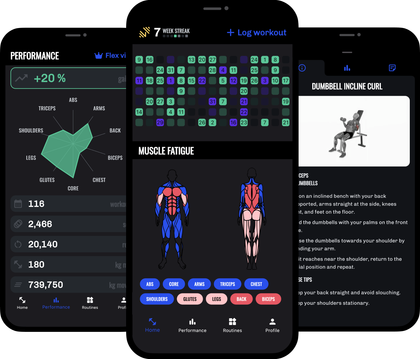
Track sets, reps, weight, rest times, RPE/RIR, and progress with Legend, on iOS and Android. For mixed lifting and conditioning work, the workout tools and exercise history matter because fatigue can hide progress.
Tyson-style training rewards a clear logbook. If you increase push-up volume but your boxing rounds get worse, the plan is not working. If your conditioning improves while joints feel good and skill practice stays sharp, the plan is doing its job.
Peek-a-Boo boxing conditioning is conditioning for a style that asks the athlete to stay compact, move the head constantly, change levels, close distance, and punch from a guarded position.
The style associated with Cus D’Amato uses a high guard, tucked elbows, rhythm, slips, weaves, and counters. The boxer is not standing tall at long range and waiting. He is bending, stepping, loading, firing, resetting, and doing it again. That is why the training cannot be only arm work.
A practical peek-a-boo-inspired conditioning plan needs:
For a non-professional athlete, this is not a reason to add more and more volume. It is a reason to choose exercises that support the style and then track whether the plan is improving your actual training.
Tyson’s useful exercise list is not a secret menu. It is the repeated work behind the style: roadwork, jump rope, boxing rounds, calisthenics, squats, pulling, trap work, core training, and carefully progressed neck work.
Roadwork gave Tyson an aerobic base. For a boxer, that base helps with more than long, slow running. It supports recovery between rounds, recovery between hard intervals, and recovery across the training week.
A modern version can be simple: 20-40 minutes of easy running, cycling, incline walking, or rowing 1-3 times per week. Add short sprint intervals only when your joints tolerate the base work. If running beats up your knees, pick a lower-impact option and keep the conditioning goal.
Jump rope fits boxing because it trains rhythm, ankle stiffness, coordination, and relaxed repeated effort. It also gives you a way to warm up without turning every conditioning session into a maximal workout.
Start with short rounds: 3-5 rounds of 1-2 minutes, resting 30-60 seconds. Progress by adding smoother rounds before adding harder tricks. The goal is rhythm you can carry into stance work, shadowboxing, and bag rounds.
Push-ups are one of the simplest ways to build repeatable upper-body endurance. Tyson-style calisthenics used them as daily volume, but most lifters should build the number gradually instead of jumping into hundreds of reps.
Use clean reps: hands set, trunk braced, chest lowering under control, elbows tracking consistently. If high reps irritate your shoulders or wrists, use an incline, handles, or a dumbbell press pattern.
Push-Up
The classic Tyson routine is often described with very high sit-up volume. The useful lesson is not that every person needs thousands of trunk reps. It is that boxing needs a trunk that can flex, rotate, brace, and keep working while breathing hard.
Use sit-ups, crunches, planks, dead bugs, hanging knee raises, and rotational core work in a measured plan. If sit-ups bother your back or hips, swap them out. The core work should help boxing and lifting, not leave you sore enough to move worse.
Sit-Up
Dips train pressing endurance through the chest, shoulders, and triceps. They make sense in a boxing-conditioning article because they build high-output upper-body work without needing much equipment.
The risk is shoulder position. Bench dips can irritate some shoulders, and deep chest dips can be too aggressive for others. Use a range you control, keep reps smooth, and swap to push-ups, close-grip push-ups, cable pressdowns, or machine dips when needed.
Bench Dip
The deck-of-cards squat workout is one of the more memorable Tyson training stories because it turns a simple bodyweight squat into a mental and conditioning drill. Put cards in a line, squat to pick one up, move through the line, then squat again to stack them. The work accumulates quickly.
For most athletes, bodyweight squats are best used as a conditioning tool, warm-up tool, or lower-body endurance finisher. If you want strength, use loaded squats, split squats, leg presses, or step-ups elsewhere in the week.
Pull-ups balance the pushing volume from push-ups and dips. They train the lats, upper back, arms, grip, and trunk, all of which support clinch strength, posture, and general athletic durability.
Use assisted pull-ups, lat pulldowns, or inverted rows if strict pull-ups are not there yet. In a Tyson-inspired plan, pulling work is the easiest thing to underdose because the famous calisthenics lists focus heavily on push-ups, dips, and sit-ups. Do not skip it.
Pull-Up
Shrugs are strongly associated with Tyson’s old-school conditioning lists. They train the traps and upper back, and they are much easier to load and track than many direct neck drills.
Neck training deserves a cautious approach. Historical boxing routines often included bridges, but most readers should not copy that movement without qualified coaching and a clear reason. A safer starting point is controlled neck isometrics, light band or harness work, and progressive trap work. Stop any drill that causes radiating pain, dizziness, numbness, or headaches.
Barbell Back Shrug
Shadowboxing and bag work are where conditioning becomes boxing. Roadwork and calisthenics can build the engine, but they do not teach range, rhythm, defense, punch selection, or how to stay relaxed while moving.
Use rounds. A practical session might include 3 rounds of shadowboxing, 4-6 rounds on the bag, and 2-3 rounds of light technical work. Keep enough structure that you know what each round is for: defense, footwork, jab entries, body shots, exits, or controlled combinations.
Planks are not famous in Tyson stories, but they solve a modern programming problem. If you are already doing sit-ups, boxing, running, and squats, you still need trunk work that trains bracing without adding more spinal flexion volume.
Pair planks with rotational work such as cable chops, medicine-ball throws, Russian twists, or controlled landmine rotations. Keep the quality high. Boxing power comes from coordinated movement, not from rushing core reps.
Plank
Start here if you want the Tyson idea without copying a professional fight camp.
This plan works best for intermediate lifters, recreational boxers, and athletes who already tolerate bodyweight training and conditioning. Beginners can use the scaling section below.
| Day | Session | Goal |
|---|---|---|
| Monday | Boxing Conditioning A | Push-ups, dips, squats, core, bag rounds |
| Tuesday | Easy Roadwork | Aerobic base and recovery |
| Wednesday | Boxing Conditioning B | Pulling, shrugs, core, intervals |
| Thursday | Skill or Rest | Shadowboxing, technique class, or full rest |
| Friday | Boxing Conditioning C | Full-body circuit and bag rounds |
| Saturday | Optional Roadwork or Jump Rope | Low to moderate conditioning |
| Sunday | Rest | Recovery, walking, mobility |
| Exercise | Sets | Reps or Time | Rest | Notes |
|---|---|---|---|---|
| Jump Rope | 4 | 2 min | 45 sec | Smooth rhythm |
| Push-Up | 4 | 12-25 | 60 sec | Leave 1-3 reps in reserve |
| Bench Dip or Chest Dip | 3 | 8-15 | 60-90 sec | Shoulder-friendly range |
| Bodyweight Squat | 4 | 20-30 | 45-60 sec | Controlled pace |
| Sit-Up or Crunch | 4 | 15-30 | 45 sec | Swap if hips or back complain |
| Heavy Bag | 4-6 | 2-3 min | 1 min | Work entries and exits |
| Exercise | Sets | Reps or Time | Rest | Notes |
|---|---|---|---|---|
| Easy Warm-Up | 1 | 8-10 min | - | Bike, row, jog, or rope |
| Pull-Up or Lat Pulldown | 4 | 6-12 | 90 sec | Balance the pressing volume |
| Barbell or Dumbbell Shrug | 4 | 10-20 | 60-90 sec | Pause at the top |
| Neck Isometric | 2-3 | 10-20 sec each direction | 45 sec | Gentle, controlled pressure |
| Plank | 3 | 30-60 sec | 45 sec | Breathe and brace |
| Sprint Interval | 6-10 | 10-20 sec | 60-90 sec | Bike or hill is joint-friendlier |
| Exercise | Sets | Reps or Time | Rest | Notes |
|---|---|---|---|---|
| Jump Rope | 3 | 2-3 min | 45 sec | Stay relaxed |
| Push-Up | 3 | 15-25 | 60 sec | Stop before form breaks |
| Bodyweight Squat | 3 | 25-40 | 60 sec | Use a steady rhythm |
| Inverted Row or Pull-Up | 3 | 8-12 | 75 sec | Keep shoulders moving well |
| Russian Twist or Cable Chop | 3 | 10-20 each side | 45 sec | Rotate under control |
| Shadowboxing | 3 | 2-3 min | 1 min | Defense and counters |
| Heavy Bag | 3-5 | 2-3 min | 1 min | Quality combinations |
This is enough work for most people. Add volume only when performance, sleep, joints, and motivation are all holding up.
The classic routine is useful as context. It shows the kind of daily structure that surrounded Tyson’s prime, but it is too much for most readers to copy directly.
Reported versions vary, but the common outline looks like this:
| Time | Training Block | Purpose |
|---|---|---|
| 4:00 AM | Roadwork, stretching, sometimes sprint work | Aerobic base, discipline, early conditioning |
| Morning | Breakfast and recovery | Fuel and reset before boxing work |
| Midday | Sparring, boxing drills, and calisthenics | Skill under fatigue and repeated bodyweight volume |
| Afternoon | Bag work, mitts, bike work, and more calisthenics | Conditioning and boxing-specific repetition |
| Evening | Additional light bike, mobility, film study | Recovery, learning, and routine |
One widely shared version describes the calisthenics as repeated blocks across the day: sit-ups, dips, push-ups, shrugs with a loaded bar, and other simple work. The total numbers often quoted are enormous: hundreds of push-ups, dips, and shrugs, and very high sit-up volume.
That matters historically, but it does not mean more is always better. The classic plan worked inside a fight-camp system with coaching, boxing skill practice, and recovery time. Treat it like a museum piece with useful lessons, not a weekly checklist for a normal training life.
The deck-of-cards squat workout is simple and unpleasant in the way old-school conditioning often is. It should be framed separately from the classic fight-camp schedule: the cited JoshStrength account presents it as a later prison-era bodyweight challenge, not as the centerpiece of Tyson’s prime camp.
One version works like this:
The appeal is that you do not need equipment. The risk is that fatigue can turn clean squats into sloppy reps. Start with fewer cards, rest between rounds, and stop before your form changes.
For a modern plan, use this as a finisher once per week:
| Level | Cards | Rounds | Notes |
|---|---|---|---|
| Beginner | 5 | 1 | Learn the pattern |
| Intermediate | 10 | 1 | Keep reps smooth |
| Advanced | 10 | 2-3 | Rest enough to keep quality |
The safest version is the one you can repeat for months. Tyson-style training becomes useful when it builds capacity, not when it leaves you too sore to box, lift, sleep, or work.
Train 3 days per week. Keep every set submaximal.
| Exercise | Sets | Reps or Time |
|---|---|---|
| Jump Rope or Bike | 3 | 1 min |
| Incline Push-Up | 3 | 8-12 |
| Bodyweight Squat | 3 | 10-20 |
| Assisted Pull-Up or Row | 3 | 8-12 |
| Plank | 3 | 20-40 sec |
| Shadowboxing | 3 | 1-2 min |
Use the practical weekly layout above. Keep most sets around RPE 7-8, with only occasional harder sets. If boxing skill sessions are intense, reduce the calisthenics volume first.
Advanced athletes can add a second short daily session, but only if recovery is already excellent. Add one variable at a time: more rounds, more roadwork, more calisthenics, or more intensity. Do not add all of them together.
If you box, wrestle, or play a collision sport, neck training may deserve a place in the plan. Build it slowly. Use neutral-position isometrics first, then light resistance if needed. Get coaching for contact work and avoid treating any neck drill as a toughness test.
Progression in a Tyson-inspired routine is not only more reps.
Use these rules:
Legend helps because this style has many moving parts. You can log push-ups, dips, pull-ups, squats, shrugs, core work, boxing conditioning, rest times, notes, and perceived effort. That makes the routine less romantic and more useful.
Tyson’s training was built for a heavyweight boxer in camp, so food had to support high output. The useful modern lesson is not a secret meal plan. It is matching food to training demand.
Most people need:
If you are training boxing seriously, do not crash diet through hard sparring blocks. Conditioning and skill practice need fuel.
Mike Tyson’s workout routine was built around early roadwork, boxing skill practice, sparring, high-volume calisthenics, shrugs, neck work, bike work, and film study. The practical version keeps the same themes but reduces the daily volume.
Commonly repeated versions of Tyson’s routine include hundreds of push-ups across the day. Treat that as historical context. Most lifters should start with a recoverable number, track reps, and build gradually.
Tyson is most associated with calisthenics, roadwork, boxing practice, shrugs, and neck work rather than a bodybuilding-style weight routine. A modern plan can still include weights for pulling, squatting, hinging, and trap work if they support boxing and recovery.
The Tyson deck of cards squat workout is a bodyweight squat drill where cards are placed in a line and picked up through repeated squats. It turns a simple squat into a conditioning finisher with accumulating reps.
Historical routines often describe early morning roadwork as a regular part of Tyson’s training camp. For most people, 1-3 roadwork sessions per week is more realistic than daily early runs.
Beginners should not copy the full routine. Start with short jump-rope rounds, incline push-ups, rows, bodyweight squats, planks, and easy conditioning. Build consistency before chasing high volume.
Neck bridges are advanced and can be risky when performed without coaching. Most athletes should begin with controlled neck isometrics, light resistance, and trap work instead of jumping straight to bridges.
Yes. A home version can use push-ups, squats, sit-ups or planks, jump rope, shadowboxing, and a pull-up bar or resistance band. If you do not have a heavy bag, use structured shadowboxing rounds.
Most people should start with 3 focused sessions per week plus 1-2 easy conditioning or boxing-skill sessions. Add work only when recovery and performance are stable.
It is a boxing-conditioning routine, not a bodybuilding routine. It can build muscle endurance and general strength, but the main goal is movement, conditioning, skill support, and repeatable output.
Log calisthenics as exercises, track roadwork or conditioning notes, record rest times, add RPE/RIR, and write short notes on boxing rounds. The goal is to see whether volume, effort, and recovery are improving together.
Lift more.
See progress.
Get consistent.
Legend is the most intuitive workout tracker for iOS and Android.


Scan on iPhone


Scan on Android